The 2016 Annual Meeting and Potluck of the Barron Park Association will be held on Sunday, March 6, 2016 from 2PM to 4PM in the Multi-Purpose Room of the Barron Park Elementary School. All residents of Barron Park are welcome to attend. Feel free to bring cookies and snacks to share, the BPA will bring coffee and tea, and we’ll make a potluck out of it! (If you bring a dish to share, please label the ingredients to help people with allergies.)
There will be free babysitting available in an adjacent room, if there is demand. If you are interested, please let us know how many children you will be dropping off by sending an email to GLuce@cbnorcal.com.
The featured topic of this year’s meeting will be a panel discussion on Sustainability and Climate Change in Palo Alto. Following the discussion there will an added Q&A session on Neighborhood Safety.
Palo Alto’s Sustainability and Climate Action Plan
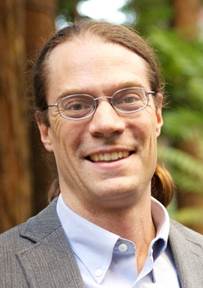
Gil Friend, M.S., Chief Sustainability Officer, City of Palo Alto
Gil will talk about the city’s emerging Sustainability and Climate Action Plan, and how Palo Alto can continue to lead the state—and the country—on climate strategies that reduce greenhouse gas emissions (GHGs), and improve quality of life, prosperity and resilience.
 Gil is a pioneer in the field of sustainability, and has extensive experience leading and developing strategic sustainability practices for cities and companies across the globe. Friend is founder and CEO of Natural Logic, Inc., a leading strategy firm helping companies build value at the intersection of business and sustainability. For the past 22 years, Friend has developed sustainability strategies and roadmaps for companies in the technology, food, energy, retail, apparel and other sectors. He developed green product rating systems for two large retail companies, led integrated eco-audits for more than 100 diverse manufacturing companies, and developed and delivered sustainability training for leadership teams associated with large public sector organizations.
Adapting to San Francisco Bay’s Shoreline to Sea Level Rise
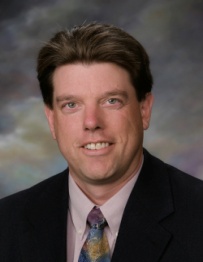
Matt Brennan, PhD, PE, Environmental Science Associates
After a brief primer on sea level rise causes, projections, and Bay-area vulnerabilities, Matt will discuss adaption measures that integrate traditional flood protection with natural measures such as managed retreat and ‘horizontal’ levees. He’ll also outline the goals and objectives of the Strategy to Advance Flood protection, Ecosystems and Recreation along the Bay (SAFER Bay) Project, which is developing shoreline protection for Palo Alto, East Palo Alto, and Menlo Park.
 Matt Brennan, PhD, PE, is an engineering hydrologist who focuses on understanding and managing estuaries and coasts for habitat, flood control, and water quality. Matt assists natural resource managers and public agencies resolve current issues and improve resiliency in the face of ongoing sea level rise.
Matt’s projects include:
- assessing coastal flood hazard and integrating habitat restoration into Palo Alto’s, East Palo Alto’s, and Menlo Park’s Bay shoreline flood protection
- adaptively managing the mouth of the Russian River for steelhead habitat
- developing sea level rise design guidance for Redwood City’s Inner Harbor
- assessing sea level rise vulnerability and adaptation strategies for the City of Mountain View
Adaptive Response to Rising Tides – Palo Alto Flood Basin
Chuck Anderson, PE, Schaaf & Wheeler
The majority of Palo Alto’s stormwater flows through the Palo Alto Flood Basin on its way to the Bay. Chuck will summarize a recent study he conducted for the Santa Clara Valley Water District which assessed storm surge and sea level rise impacts on the Flood Basin. The study considers and recommends adaptive responses to the growing vulnerabilities of the Flood Basin to sea level rise.
 Charles D. Anderson, PE has more than 30 years of experience in the areas of groundwater and surface water hydrology, flood control and drainage, water supply and distribution, and wastewater collection and pumping. He is involved in all the phases of project management and implementation from project feasibility through to design development, construction document preparation, and construction support. On behalf of public and private clients he has completed numerous FEMA flood insurance studies and letters of map change. Mr. Anderson is familiar with the Adobe Creek, Barron Creek, Matadero Creek and San Francisqito Creek watersheds and has designed two major storm water pump stations for the City of Palo Alto.
Special Q&A Session – Neighborhood Safety
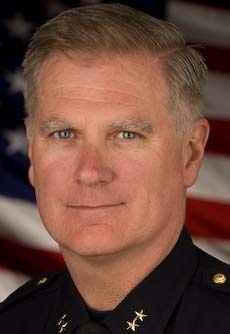
Dennis Burns, Chief of Police, City of Palo Alto
 Burns, a 33-year veteran of the Palo Alto Police Department, started his career in the Palo Alto in 1982. He has worked all patrol shifts and served as a Field Training Officer, a detective, a detective supervisor and a crime-prevention officer. He was promoted assistant police chief in 2007 and became interim police chief in 2008 and was appointed chief in 2009. Burns holds a bachelor’s degree in Administration of Justice from San Jose State and a master’s degree in Public Administration from University of San Francisco

 At the end of August we will begin installation of new gates for the pool area to comply with State code which requires that the gates open out away from the pool area. Both gates will be equipped with crash bars to allow emergency exit. At the same time we will be installing new security lock systems on the pool gates, the clubhouse doors, the gate at the end of the fire lane and the tennis court. These will be operated by an RFID key fob. The fobs will be distributed to residents and owners in mid September. This should eliminate the unauthorized copying of keys which has become a problem. The system will also allow us to assign temporary access codes to service personnel and contractors working at Barron Square.